Materials & Care
Every Artifact begins with stoneware clay, but rarely ends there.
I enjoy bringing together different materials as each contributes its own way through texture, weight, light absorbance and feel to it. Because these materials age and respond to their environment in different ways, each deserves a slightly different kind of care. Rather than asking every surface to be treated the same, I invite you to care for each material according to its nature. In that way it is like the human body, each part requiring something slightly different…
Below you'll find a short guide to identifying the materials in your Artifact, along with the proper care.
Stoneware Clay
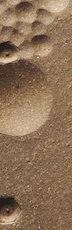
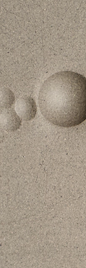
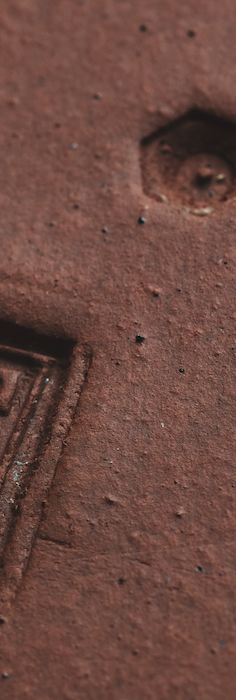
Clay is, once fired, by far the most forgiving and durable of all the materials I work with. Each piece is fired at high temperatures, transforming the clay into a dense, stone-like ceramic—hence the name stoneware.
Unglazed stoneware remains slightly porous. Over time, it may develop a natural patina or absorb stains from strongly coloured foods and liquids. Many collectors appreciate this gentle aging as part of the piece's story. Because of its porous nature, unglazed stoneware is not intended for wet or oily foods. Dry foods, however, are perfectly suitable.
To clean, simply rinse with water and, if needed, use a soft brush or cloth. Allow the piece to dry completely before storing.
Clean with a soft cloth and, if needed, a little water. Treat the glass with the same care you would any delicate object, avoiding strong impacts. Not suitable for the dishwasher or microwave.
Glass
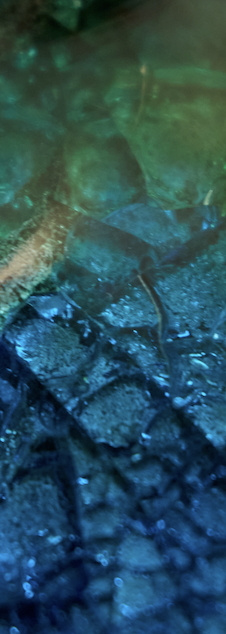
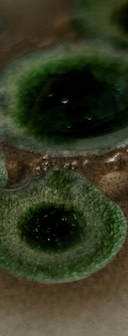
Glass is one of my favourite materials to combine with stoneware. During firing, it softens and melts directly onto the ceramic, creating unique visual patterns and cracks, that can never be repeated exactly.
Although permanently fused to the clay, glass remains a material that is fragile and thus appreciates gentle handling. It is durable enough for everyday display and use but, like any glass, may chip or crack if subjected to strong impacts. If using a glass surface to hold objects, I recommend placing them down gently—for example, rings, jewellery, or other hard objects.
Clean by simply wiping with a soft cloth or rinse gently with water. Avoid abrasive cleaning products or scrubbing pads, which may dull the surface over time.
Please note: The glass used in my work is not food-safe and should not come into direct contact with food or beverages.
Transparent Glaze
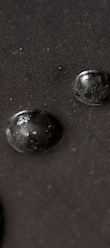
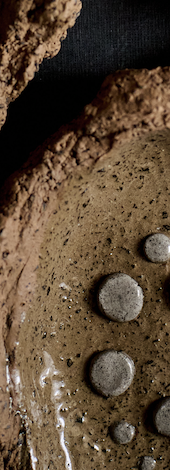
While I love the tactile quality of raw clay, some surfaces are intentionally finished with a transparent glaze. This creates a smooth, non-porous surface that protects the ceramic while allowing the natural colour and texture of the clay to remain visible.
All glazed surfaces are food-safe and intended for everyday use. They are well suited for serving food, liquids, and flowers, while the surrounding unglazed clay continues to show the material in its most natural form.
Clean by simply washing with warm water and a mild dish soap. A soft sponge or cloth is all that's needed. Although stoneware is highly durable, I recommend avoiding sudden temperature changes to help preserve the piece for years to come.
Metal Leaf
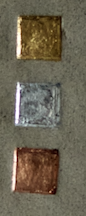
Metal leaf is applied by hand after the ceramic has been fired, adding delicate accents to selected areas. Rather than covering the piece, it is used sparingly to highlight texture, form, and create depth through contrast. Leaf used can range from: gold, brass, silver, aluminium & bronze. Note that silver oxidizes over time.
Metal leaf remains a delicate finish. Over time, it may develop subtle signs of age that become part of the artifact's history.
Clean by gently dusting with a soft, dry cloth. If necessary, use a barely damp cloth and dry immediately. Avoid abrasive cleaners, prolonged moisture, or soaking. In all honesty I’d try to not touch the material at all as it is extremely fragile, blowing the dust off may often suffice.
Engobes
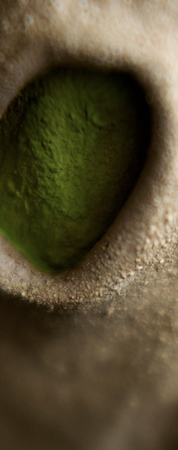
Engobes are a traditional ceramic surface finish that allows me to introduce subtle colour while preserving the texture of the stoneware. Unlike glaze, they don't create a glass-like surface. Instead, they leave the clay with a soft, matte finish an in that add a natural feel to the piece.
Clean by simply rinsing with water or wipe with a soft cloth. No special care is required.