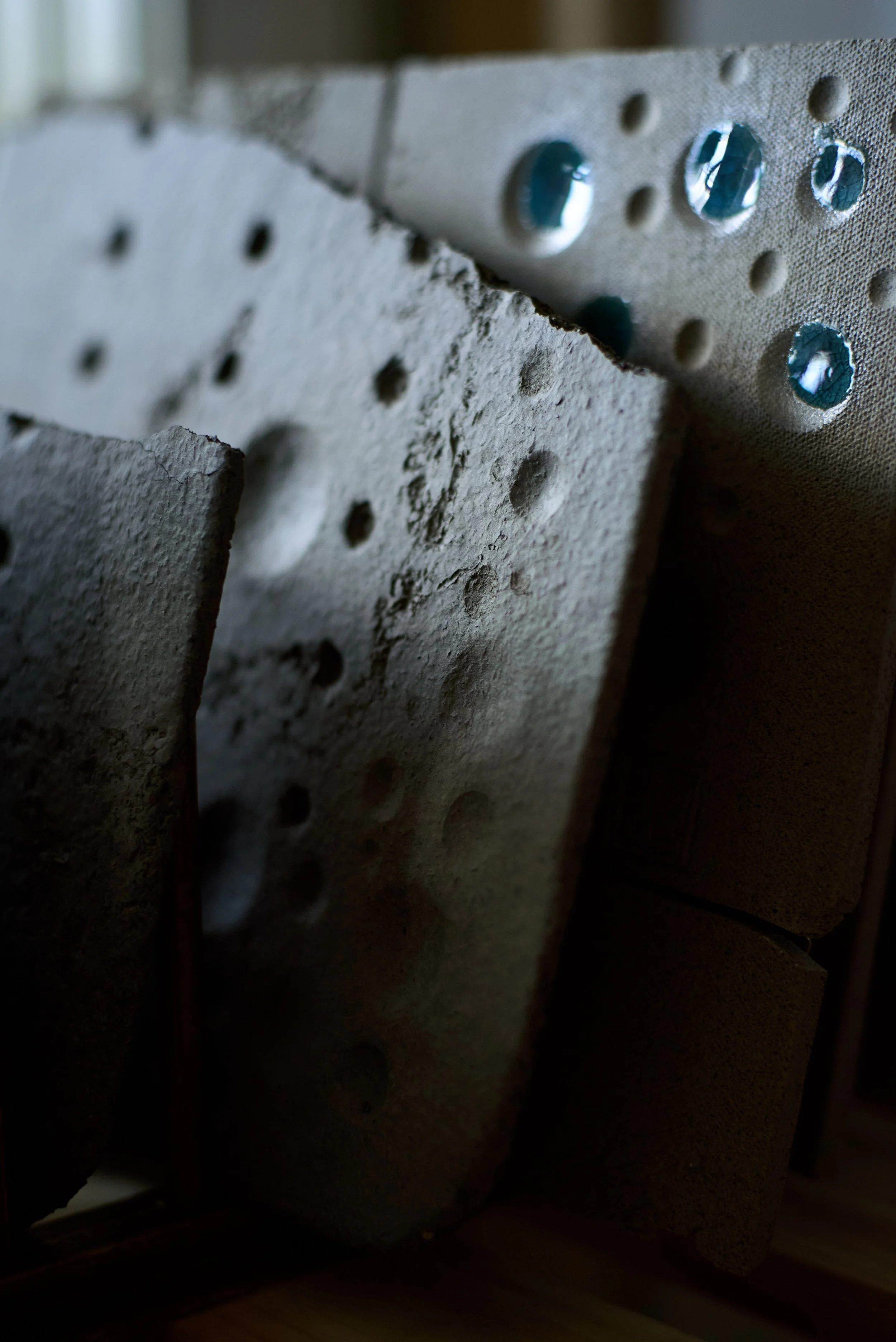
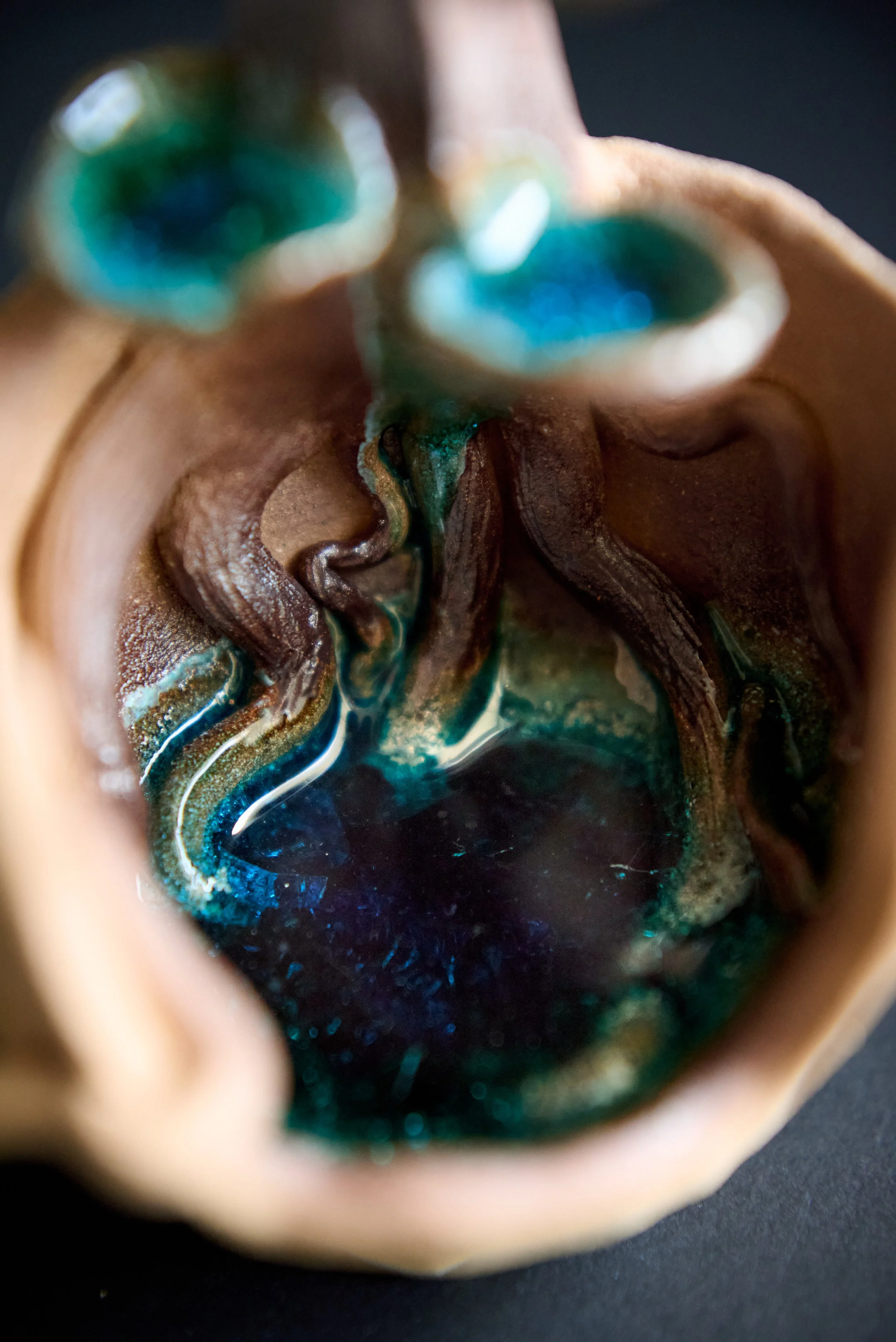
Stage #1
Stage #3
Stage #4
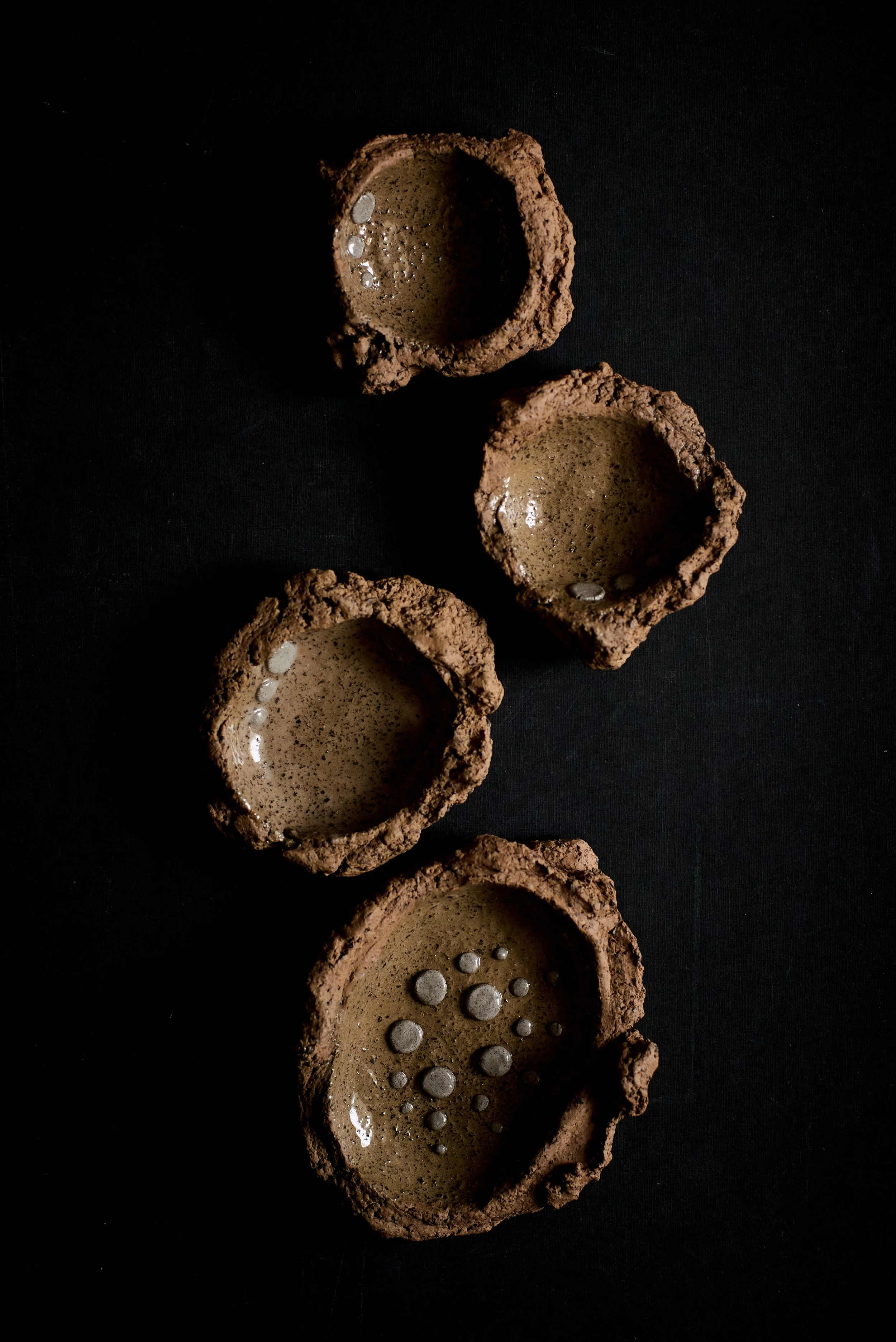
Stage #6
The Artistic Evolution
Artistic evolution unfolds slowly, like a quiet but sometimes ephemeral river carving its path. Each piece I make is a moment caught in time, shaped by where I am, what I’m learning, and what I feel curious to explore. My work changes as I do. Looking back, Though following the Path of Creation feels entirely different in the moment, I can trace the stepping stones that have brought me here. I hope this little narrative offers a glimpse into that journey, and how beauty emerges from it…
First decisions were made - to work tiny.
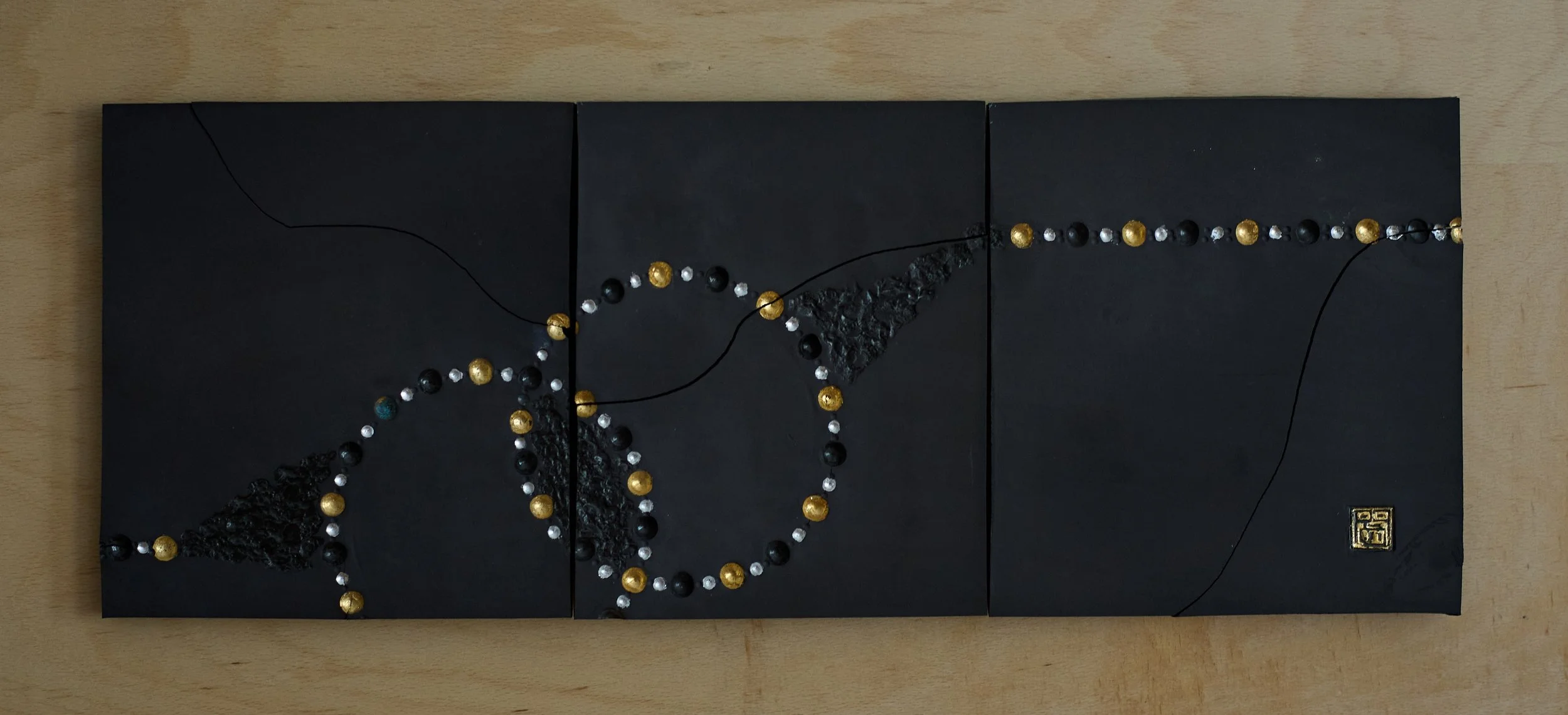
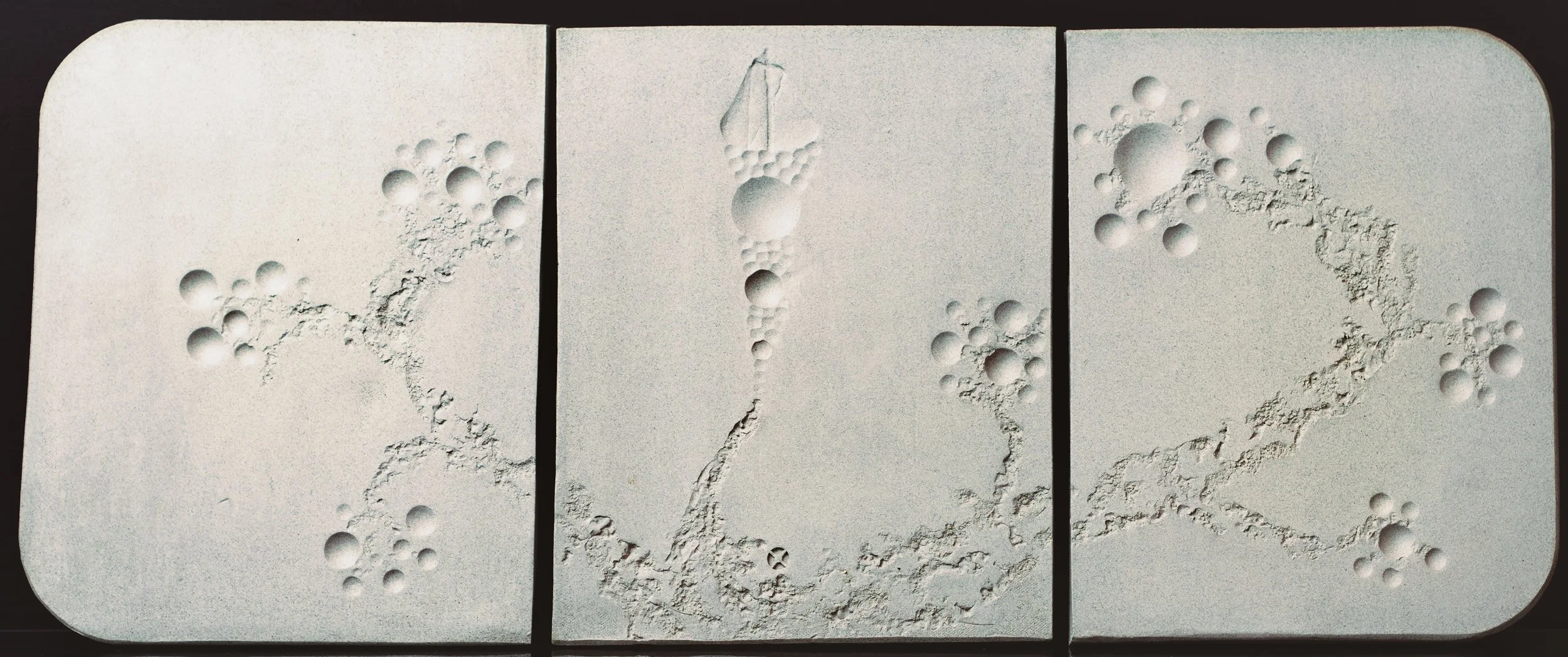
When single tile works mostly stayed flat during drying and firing, I felt like expanding my work. With my fascination for church art and knowing about the tryptichon as a format I chose to work in it. Though my tools and the concept stayed the same I was surprised to learn that by merely changing the format of my work plentiful of new pieces sprung from my hands.
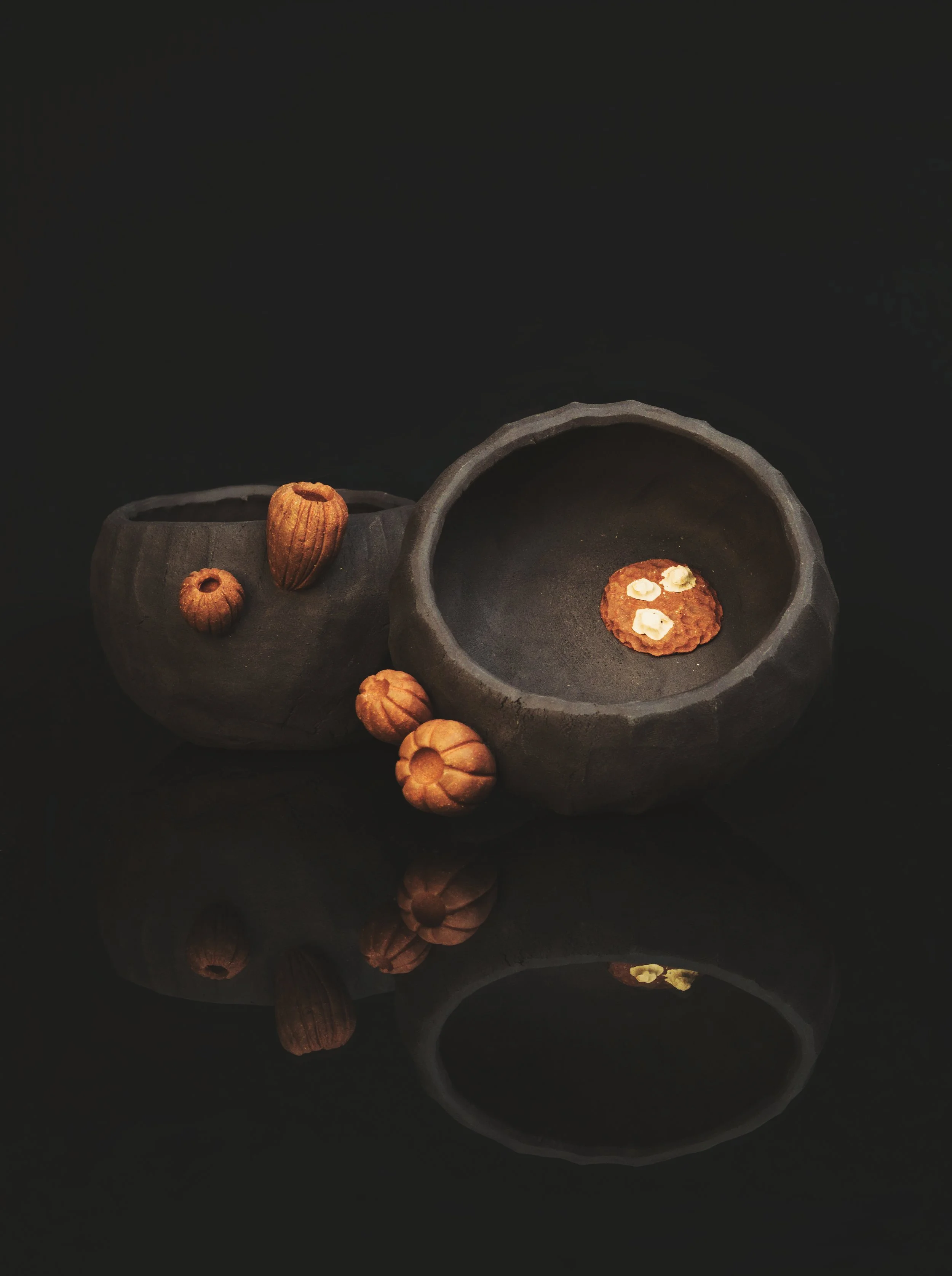
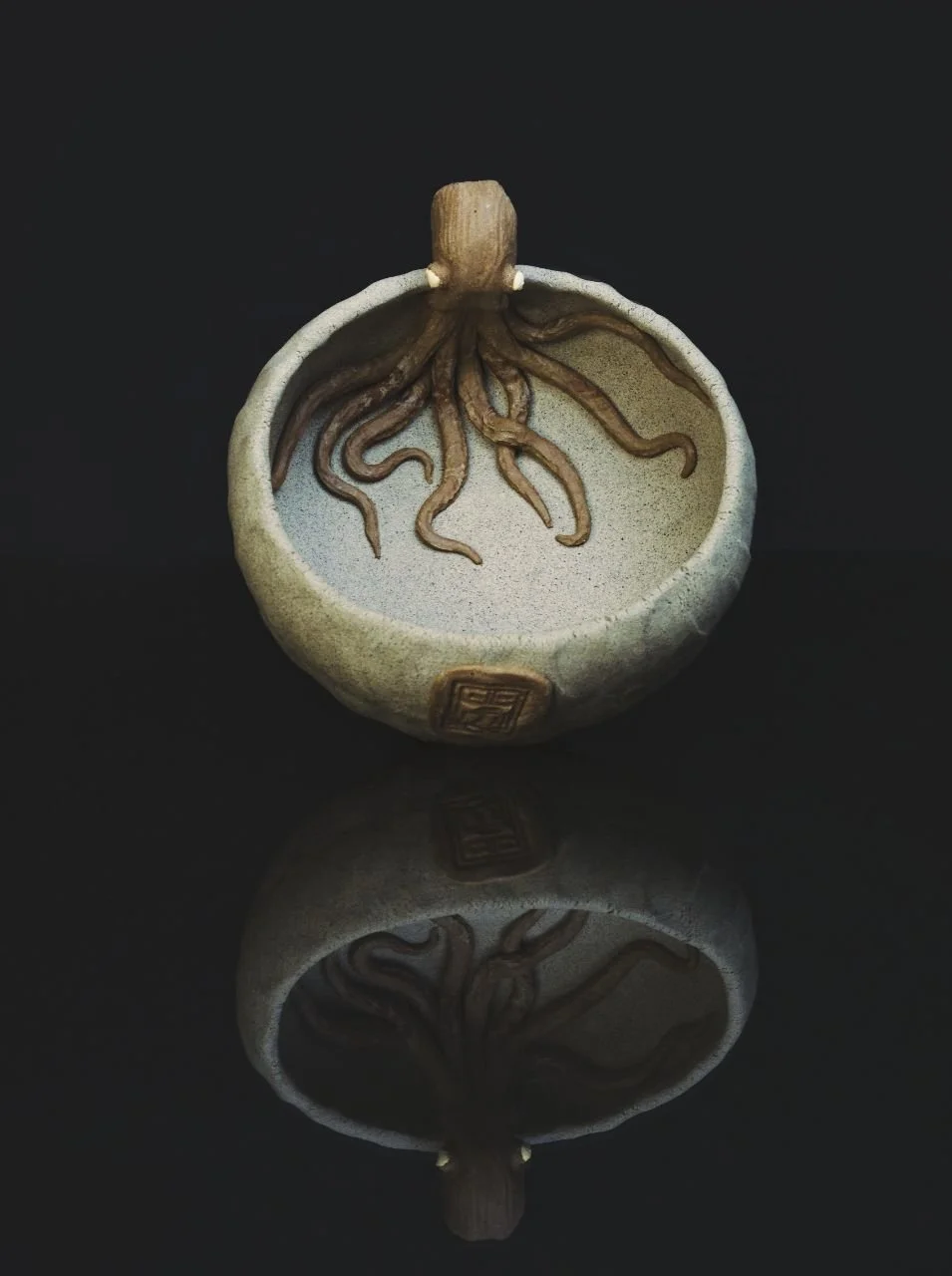
Suddenly, the Octopus emerged. I would’ve never imagined I would get obsessed for the better part of a year with sculpting this fascinating creature…
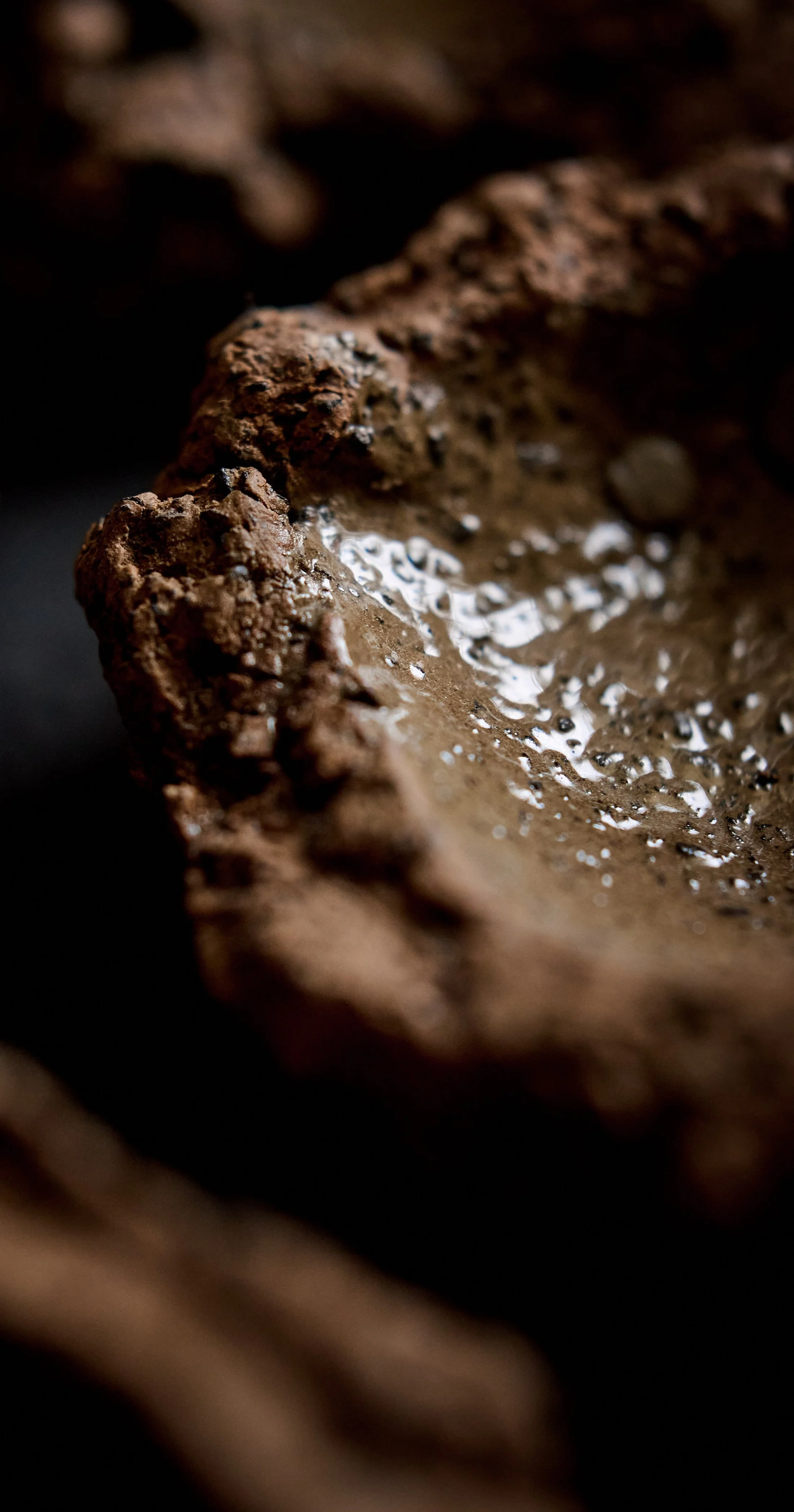
Wait a second, I can use glass in ceramics? That was quite the revelation, and a big step in showing me that I want to work outside of the norm. Glass is usually not found in ceramics because it breaks easily and therefore stands in stark contrast to the longevity of ceramic objects. Something once durable suddenly becomes fragile and asks for gentler care Poetical … as a sensitive soul I feel the same way ever since touching that otherworldly for the first time.
What started as a way of giving more depth to my octopus-bowls quickly spread onto my tile work and finally on sculptural pieces. Glass when fired at high temperatures first spreads out and then crawls up, this effect I try to incorporate into my work
Stage #2
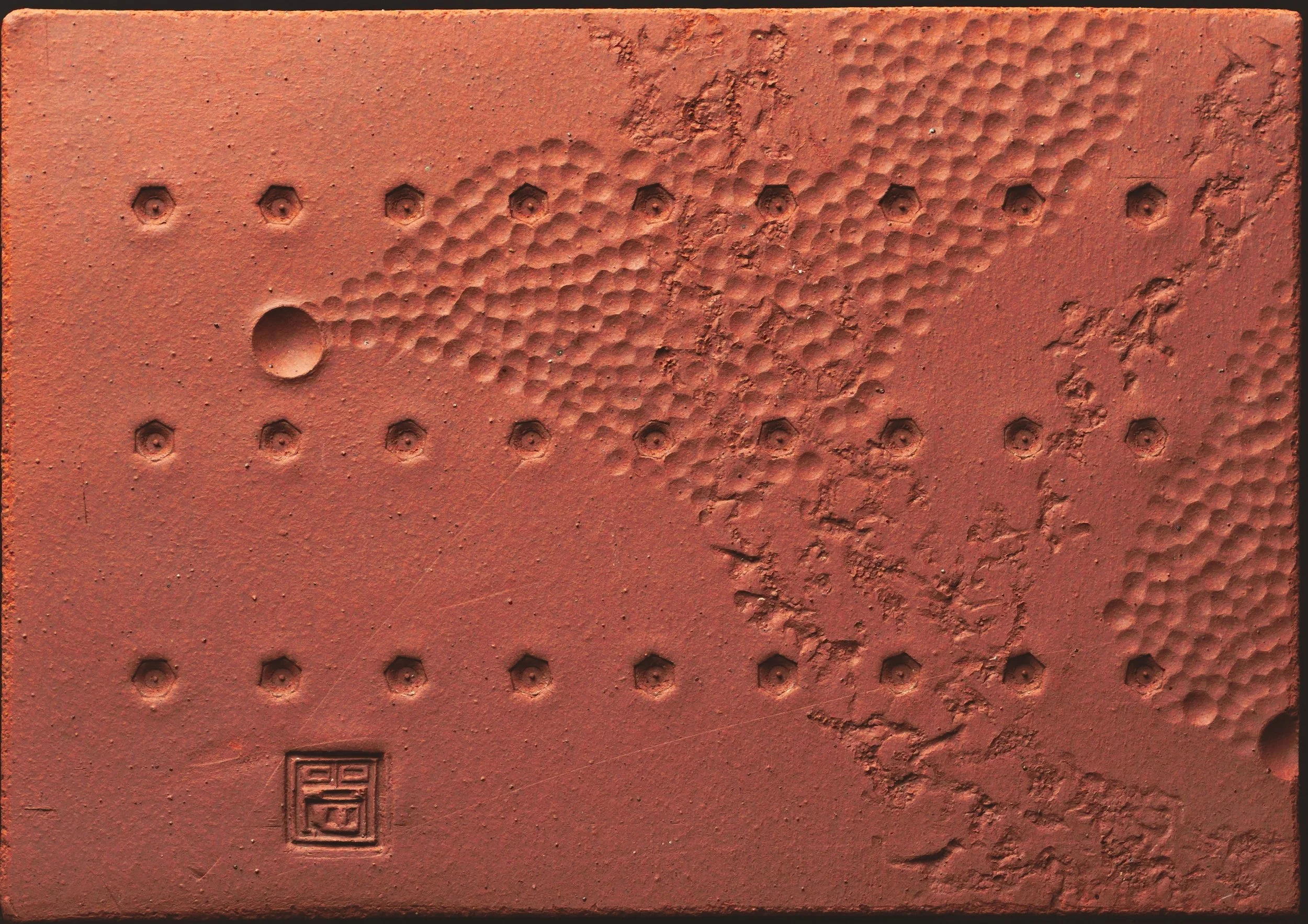
Realizing how difficult it is to attain even basic skills on the potter’s wheel, I began experimenting with different techniques to get a feel for clay. Among them, slab building stood out — rolling out cookie dough was a skill I already had, and I felt it offered a gentle entry point. Being inexperienced, I started with shallow or flat forms. Glazing quickly proved tiresome, so I chose to focus on mostly flat tiles with imprints instead.
Drawn by my fascination with the number three, I explored three types of imprints: round, irregular, and mechanical. With the tools and a concept at hand, the work began to reveal itself. Many cracked during drying, or didn't survive the firing process at all. Years later I’ve learned that slab work is just as difficult as anything else.
Stage #4
While I felt that my work on tiles could become my artistic signature, after some time I found myself drawn back to vessels. At this stage, I was still avoiding glazes at all costs, so I looked for other ways to adorn the cups. Slowly, sea-inspired motifs began to emerge — and placing them along the side of the wall gave them a dual role, serving as both decoration and a subtle handle.
Stage #5
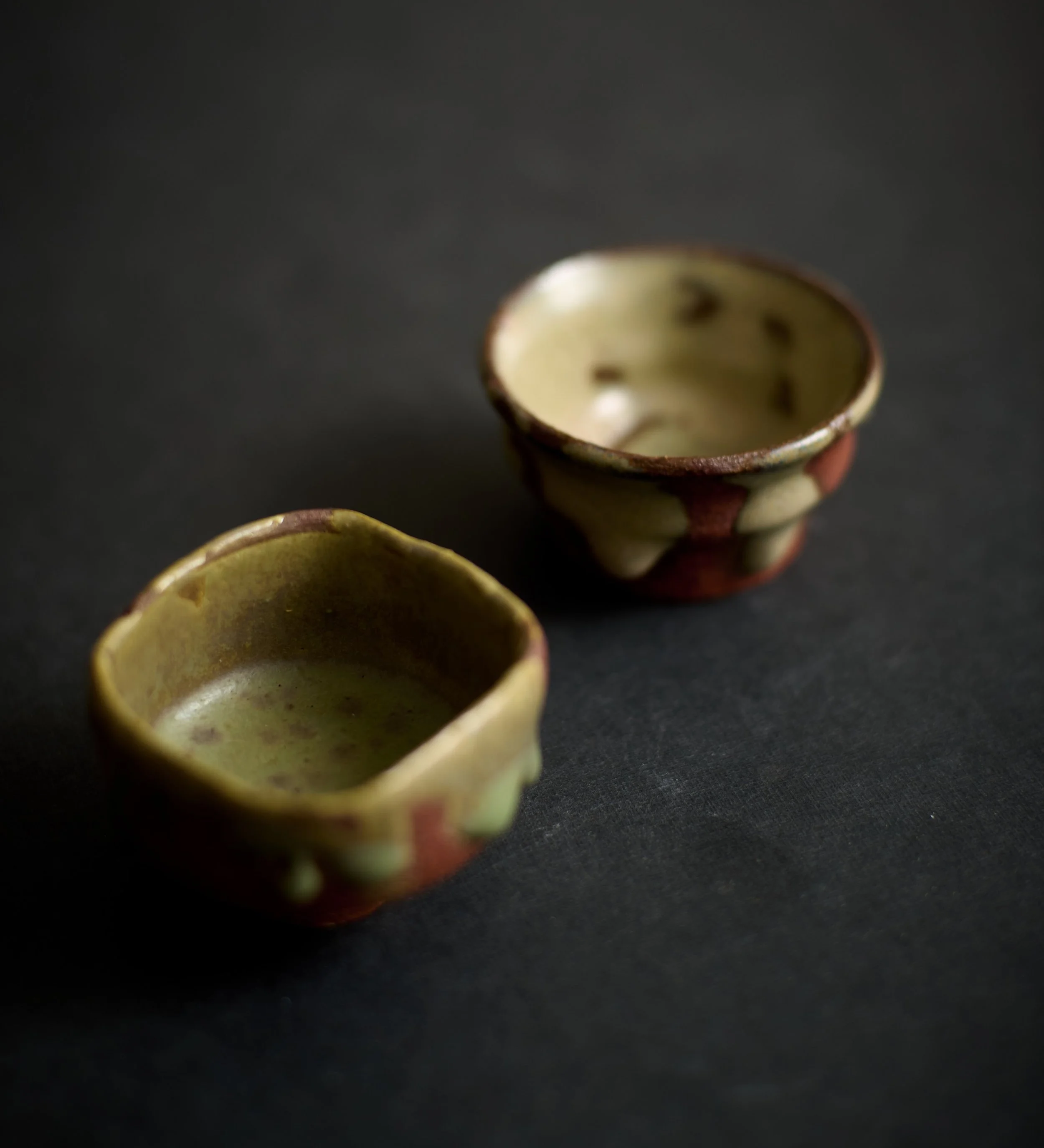
During that time I had my first markets, soon it turned out that unglazed, raw ceramics weren’t received as much as I have previously hoped. This made me explore ways of bringing that little something into them, For the inside I sticked to transparent glaze as I wanted to preserve the natural color of the clay, on the outside I experimented with a variety of glazes but none of it felt right.